Know the grass. Read the lie.
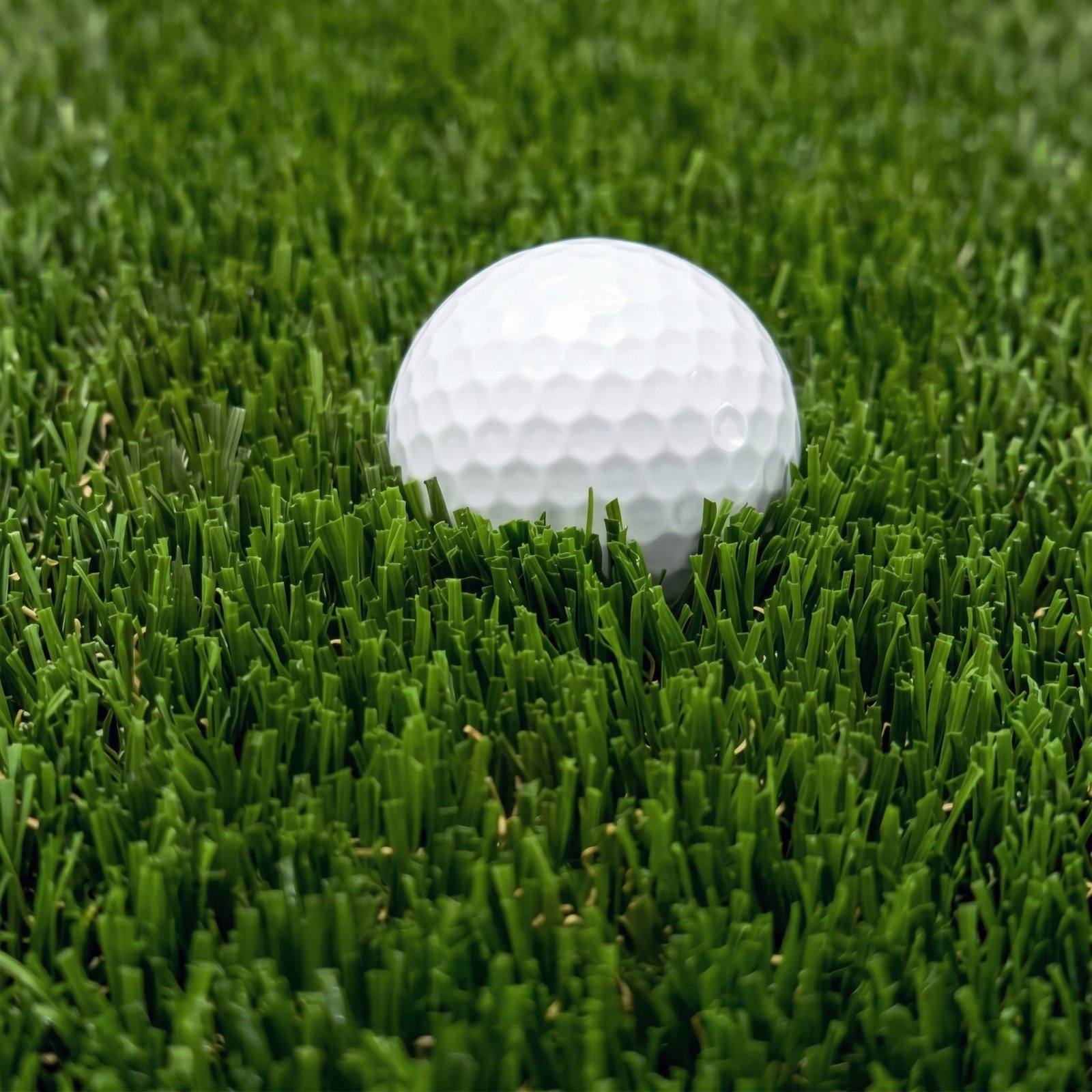
Two golfers can hit the same 7-iron and get very different results, and often the grass is the reason. The type of grass and how short it is cut decide how the ball sits, how the club gets through, and how much spin you get. Here is a quick field guide, and how to practice each lie at home.
Cool-season grasses
These thrive in cooler climates, so you will find them on most courses across the northern half of the US.
Bentgrass. Fine blades that can be mowed very short. It is the classic putting-green grass in cooler regions, and bentgrass fairways give tight lies where the ball sits right down on the surface. It rewards ball-first contact, and a strike a little behind the ball shows up fast.
Kentucky bluegrass. Soft and dense, common in northern roughs and fairways. In the rough it grows thick and lush, and it can wrap around the hosel and close the clubface as you swing through.
Perennial ryegrass. Tough and quick to grow in. Many northern courses use it on fairways and tees. Southern courses often overseed their Bermuda with it for winter, which is why winter golf in the South can play softer than summer golf.
Poa annua. Also called annual bluegrass. It is common on greens on the West Coast and in the Northeast. It grows at different rates through the day, so poa greens tend to get bumpier by the afternoon.
Warm-season grasses
These love heat, so they dominate courses across the South and Southwest.
Bermuda. The most common golf grass in warm climates. On firm Bermuda fairways the ball tends to sit up a little. In the rough it is wiry and grabby, so the club can twist as it goes through. On the greens, Bermuda has grain: putts drift toward the direction the grass grows.
Zoysia. Dense and stiff, so the ball sits up nicely on fairways, a little like it is on a low tee. Zoysia rough is a different story. It holds the club more than it looks like it will.
Seashore paspalum. It tolerates salty water, so you see it at coastal and resort courses. It plays a lot like Bermuda, with a sticky feel in the rough.
What actually changes the lie
- Height of cut. Tees and fairways are mowed short and rough is left long. Shorter grass puts the ball closer to the ground and leaves less room for a strike that is slightly heavy.
- Density. Dense turf holds the ball up. Thin turf lets it settle down.
- Firmness. On firm ground the club bounces. On soft ground it digs.
- Grain. Grass growing toward you grabs the club more than grass growing away from you.
How to practice every lie at home
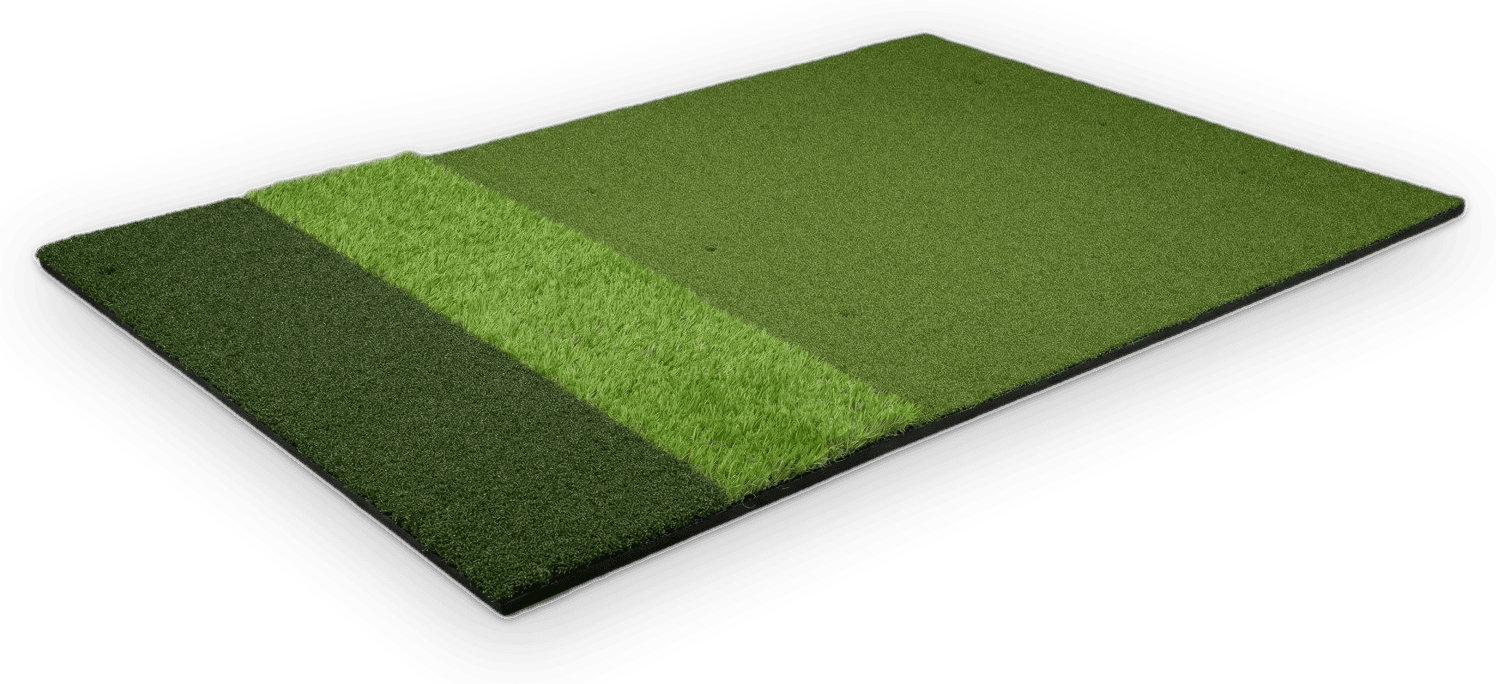
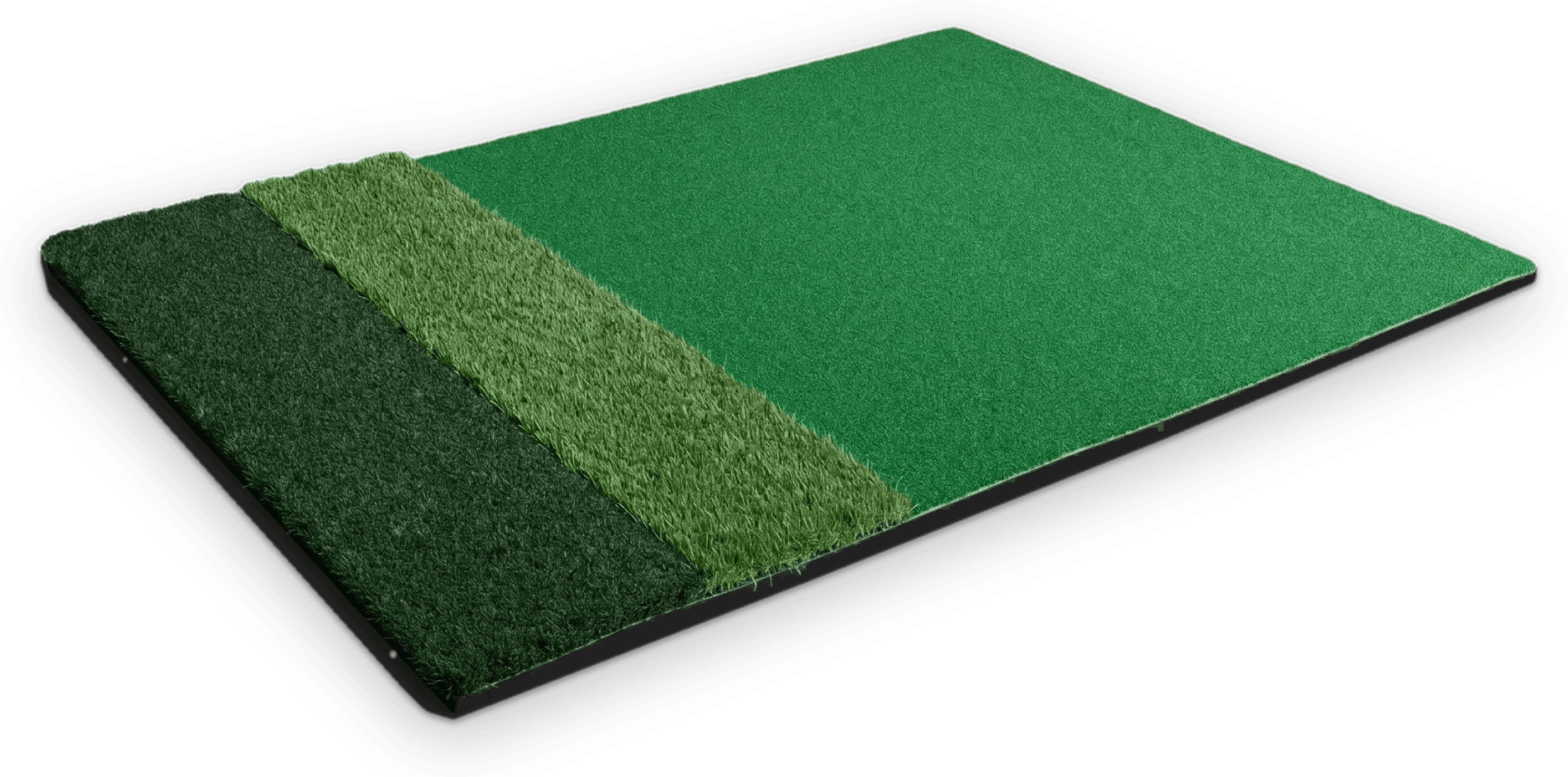
A practice mat cannot copy every grass, but it can give you the three lies that matter most: a teed-up ball, a tight fairway lie and a ball sitting down in longer grass.
- Tight lies. Hit irons and wedges from the shortest turf and focus on ball-first contact. If you catch it heavy at home, a bentgrass fairway will show it too.
- The rough. Hit from the longest turf. Open the face a touch, grip a little firmer and expect less spin and more roll.
- Tee shots. Tee it up and work on height and start line.
Both TriZone mats put a tee strip, a fairway zone and a rough zone on one surface, so you can change lies between shots without moving the mat.